



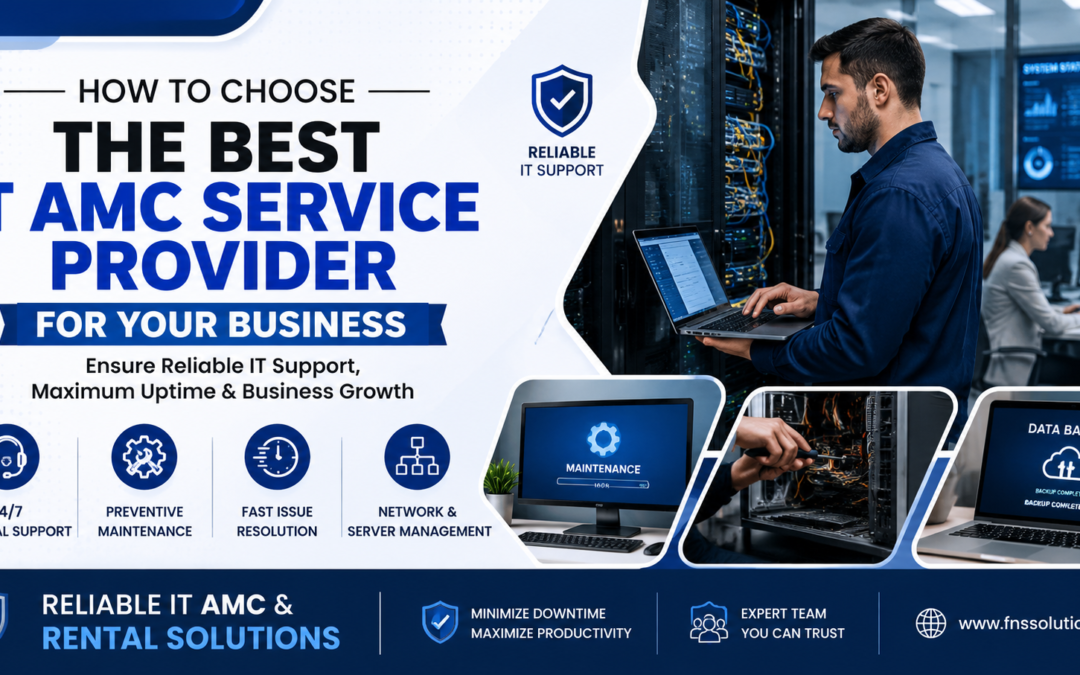
In today’s technology-driven business environment, maintaining a reliable IT infrastructure is essential for productivity, security, and business continuity. Whether you run a small office, a growing startup, or a large enterprise, partnering with the right IT AMC (Annual Maintenance Contract) service provider can help you minimize downtime, reduce operational costs, and ensure smooth business operations.
However, with many service providers available in the market, choosing the best IT AMC service provider for your business can be challenging. This guide will help you identify the key factors to consider before making your decision.
What is an IT AMC Service?
An IT Annual Maintenance Contract (AMC) is a service agreement between a business and an IT support company. Under this agreement, the service provider is responsible for maintaining, monitoring, troubleshooting, and repairing your IT infrastructure, including computers, laptops, servers, networks, printers, and other IT equipment.
The primary goal of an IT AMC is to ensure that your technology systems operate efficiently and securely throughout the year.
Why Your Business Needs IT AMC Services
Businesses rely heavily on technology for daily operations. Unexpected hardware failures, network issues, or software problems can lead to significant downtime and financial losses.
Benefits of IT AMC Services include:
- Reduced IT downtime
- Faster issue resolution
- Regular preventive maintenance
- Improved system performance
- Enhanced cybersecurity
- Cost-effective IT support
- Expert technical assistance
Factors to Consider When Choosing an IT AMC Service Provider
1. Evaluate Their Experience and Expertise
Experience matters when it comes to IT support. Look for a company that has extensive experience managing IT infrastructure across various industries.
Ask questions such as:
- How many years have they been in business?
- What industries do they serve?
- Do they have certified IT professionals?
An experienced provider can quickly diagnose and resolve technical issues while recommending best practices for your business.
2. Check Their Range of Services
Not all IT AMC providers offer the same services. Choose a provider that can support your complete IT ecosystem.
Services should include:
- Desktop and laptop maintenance
- Server support
- Network management
- Printer maintenance
- Data backup solutions
- Cybersecurity services
- Software troubleshooting
- Remote and onsite support
Comprehensive service coverage ensures you won’t need multiple vendors for different IT requirements.
3. Assess Response Time and Support Availability
Downtime can be costly for any business. Therefore, response time should be one of your top considerations.
Look for providers that offer:
- Quick ticket response
- Remote support assistance
- Onsite technical visits
- Emergency support services
- Defined Service Level Agreements (SLAs)
A reliable IT AMC provider should have a clear commitment to issue resolution timelines.
4. Review Customer Testimonials and References
Customer feedback can provide valuable insights into a provider’s reliability and service quality.
Check:
- Google Reviews
- Client testimonials
- Case studies
- Business references
Positive reviews and long-term client relationships often indicate consistent service performance.
5. Understand AMC Contract Terms
Before signing any agreement, carefully review the contract terms.
Key points to verify include:
- Scope of services
- Preventive maintenance schedule
- Hardware coverage
- Exclusions and limitations
- Contract duration
- Renewal terms
- Escalation procedures
A transparent contract helps avoid misunderstandings in the future.
6. Consider Scalability
Your IT requirements will grow as your business expands. Choose a provider capable of scaling services according to your future needs.
A scalable IT AMC partner can support:
- Additional workstations
- New office locations
- Server upgrades
- Cloud migration
- Enhanced security requirements
This flexibility ensures long-term value from your partnership.
7. Compare Pricing and Value
While cost is important, the cheapest option is not always the best.
Compare providers based on:
- Services included
- Support availability
- Expertise level
- Preventive maintenance frequency
- Response time commitments
Focus on overall value rather than just the monthly or annual fee.
8. Verify Security and Data Protection Practices
Cybersecurity threats continue to increase every year. Your IT AMC provider should prioritize data security and compliance.
Ask about:
- Antivirus management
- Firewall monitoring
- Data backup solutions
- Patch management
- Security audits
A proactive approach to security can help protect your business from costly cyber incidents.
Questions to Ask Before Hiring an IT AMC Provider
Before finalizing your decision, ask the following questions:
- What is included in your AMC package?
- Do you offer onsite and remote support?
- What is your average response time?
- Are emergency services available?
- How often will preventive maintenance be performed?
- Do you support servers and networking equipment?
- Can your services scale with our business growth?
Final Thoughts
Choosing the best IT AMC service provider is an important investment in your business’s productivity and long-term success. The right partner will not only resolve technical issues but also proactively maintain your IT infrastructure, improve security, and help your organization operate efficiently.
By evaluating experience, service offerings, response times, customer reviews, contract terms, and scalability, you can confidently select an IT AMC provider that meets your business needs.
Looking for reliable IT AMC services? Partner with a trusted IT support company that offers proactive maintenance, expert technical support, and customized solutions to keep your business running smoothly.